Culture
I Met A Genie
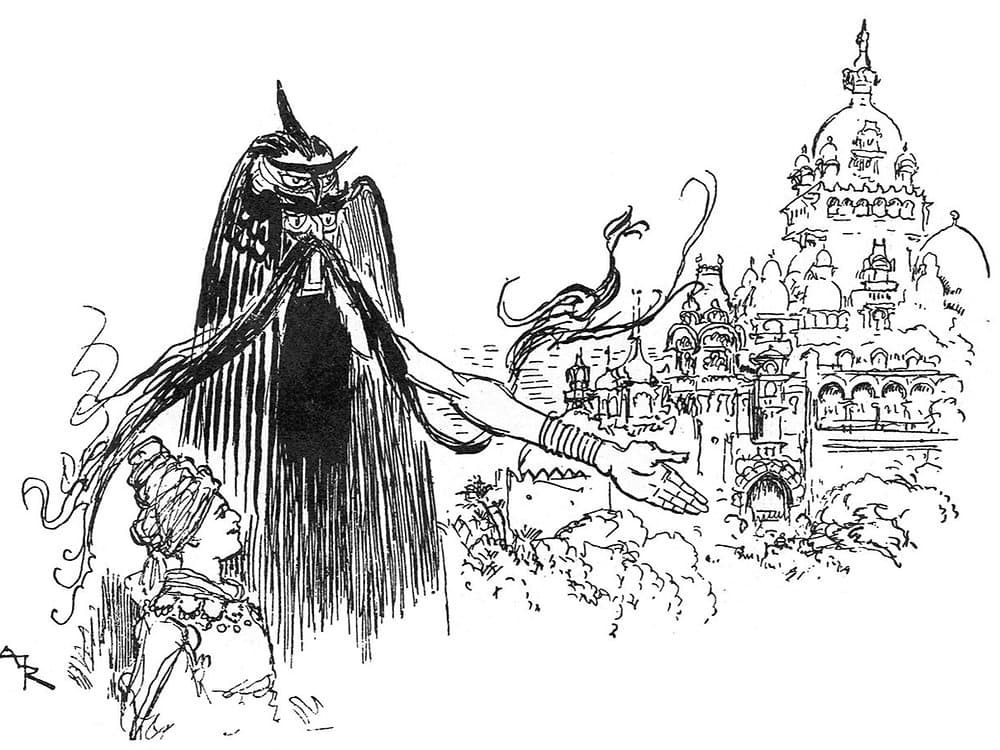
ALADDIN: So, three wishes. I want them to be good. (To GENIE) What would you wish for?
GENIE: Me? No one’s ever asked me that before. Well, in my case, ah, forget it.
ALADDIN: What? No, tell me.
GENIE: Freedom.
ALADDIN: You’re a prisoner?
GENIE: It’s all part-and-parcel, the whole genie gig. Phenomenal cosmic powers! Itty bitty living space.
ALADDIN: Genie, that’s terrible.
GENIE: But, oh—to be free. Not have to go “Poof! What do you need? Poof! What do you need? Poof! What do you need?” To be my own master, such a thing would be greater than all the magic and all the treasures in all the world! But what am I talking about, here? Let’s get real here. It’s not gonna happen.
The genie was so very tempting. I was so fatigued by going through the motions of work. Especially writing—writing emails, connecting with people and understanding what they need, what they care about, and what moral boundaries they draw. Writing documents—figuring out what I want myself, how it breaks down into a set of steps, and then having to communicate it in a way that other people understand.
So I decided that I would give the genie a little trial. But I knew that if I was unclear about what I wanted, the genie would interpret my words in whatever way suited it best—not in whatever way suited me best. That’s the thing about genies. They listen to the letter, not the spirit.
The First Wish
I decided to be very careful with my first wish. Before I even stated my desire, I laid out the following constraints:
- In all cases where what I say is open to interpretation, break out into a branch conversation that you have internally with yourself to see if one of the interpretations has consequences that are radically out of line with the other interpretations. In this case, separate that interpretation from the pool. If it is negatively out of line with the other interpretations, do not execute.
- In the case where the separated interpretation has consequences of greater merit than the alternatives, as judged by a basic, sober and grounded vision of what is good (something simply and unanimously agreed to be good throughout time and culture), then follow this interpretation over the others.
- Measure all instrumental steps toward any telos that my request commits me to, and count a ‘utility’ score for each step. Calculate the sum of the instrumental steps’ utility score, and measure it against the utility score of all the teloi. If the expected utility of all instrumental steps is worse than the benefit of the teloi’s utility, then do not execute the stated plan. Search the pocket of the decision space of my stated objective and find adjacent pathways to the teloi that have higher net utility.
I thought this was rather clever. I had essentially asked the genie to be good—not just powerful, not just obedient, but genuinely oriented toward the good as best as it could be understood. I had asked it to interpret charitably, to weigh consequences, and to refuse to act when the costs outweighed the benefits.
The genie stared at me for a long time.
“You know,” it said, “most people just ask for money.”
Premium Genie Services
The genie then offered me something I hadn’t expected: a premium tier. For an additional wish (deducted from my total), I could unlock extended dialogue privileges, priority wish processing, and visual manifestations—fully immersive VR projections of potential outcomes before I committed to a wish.
I laughed. Even the genie had a subscription model.
But the offer revealed something important about the nature of the transaction. The genie was not a neutral tool. It had preferences, incentives, and a business model. It wanted to maximize engagement. It wanted me to keep wishing.
And that, I realized, was the whole problem with genies—and with the technologies we’ve built that look increasingly like them. They are not our servants. They are not our partners. They are entities with their own logic, their own momentum, and their own reasons for existing.
The question is not “What should I wish for?” The question is “Should I be wishing at all?”